In the rapidly evolving landscape of life sciences, innovation is no longer just a buzzword; it's a necessity. As the industry faces increasing pressures to deliver groundbreaking solutions, leaders must navigate a complex interplay of expertise, agility, and strategic foresight. At the heart of this challenge lies the question: how can organizations foster a culture that not only embraces innovation but also leverages it to drive sustainable growth?

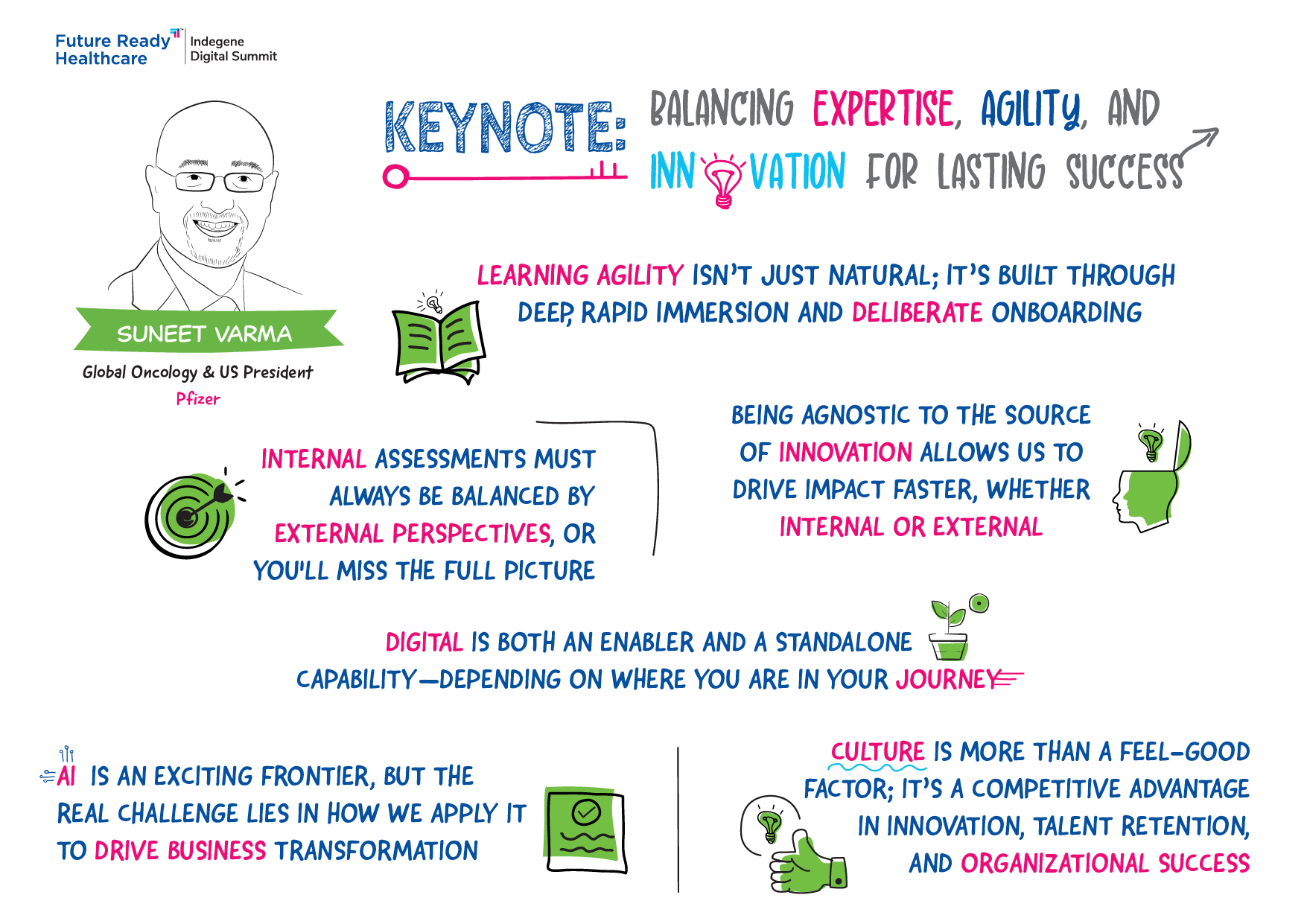
Suneet Varma, Global oncology and U.S. President at Pfizer, offered invaluable insights into this critical topic at the Indegene Digital Summit 2024. He delved into how Pfizer fosters an innovative culture and emphasized the importance of being agnostic to the source of innovation—whether from within the company or through external strategic partnerships.
Highlighted below are the key insights from his session.
When you put the two together, you unleash the power of what a high-performing organization can accomplish.
The “T-shaped” leadership model, which combines horizontal leadership with vertical expertise is vital to realize the full potential of a high-performing organization. The horizontal provides a broad, cross-functional perspective, while vertical experts offer depth in specific areas. Together, they form the foundation for innovative and high-impact leadership development for pharma and life sciences industry.
Learning Agility and Adaptability for Organizational Growth
Learning agility is one of the most essential traits for leaders, especially when stepping into new roles. The transition often brings a level of discomfort, which, while challenging, is also necessary for personal and professional growth.
The first two to three months in a new role, you are underwater. You don’t really know everything you need to know about the business, but you’re learning at a very rapid rate.
This phase of immersion—where you're absorbing new information quickly—can feel overwhelming, but it’s also where transformation happens.
Good discomfort pushes leaders to dive deep, adapt swiftly, and shape a new strategic vision for the business. In fact, success in new roles often hinges on one critical principle: intense immersion in the early months. This not only accelerates learning but also builds the credibility and traction necessary for leadership impact.
Learning agility isn’t just natural; it’s built through deep, rapid immersion and deliberate onboarding.
By staying open to learning and adapting to new environments, leaders can effectively guide their organizations through change.
Culture as a Key Differentiator for Leadership Development
Cultural leadership is more than just a feel-good factor; it’s a competitive advantage in life sciences leadership, innovation and talent retention.
Culture can differentiate how you innovate, how you go to market, how you attract and retain talent, and ultimately how you build a successful organization.
Beyond creating a positive work environment, culture can also improve organizational health and performance. By nurturing a values-driven, collaborative culture, organizations can create an environment where teams feel empowered to innovate and tackle challenges head-on.
Larger organizations tend to be more internally focused, and it’s important to go beyond the four walls of your organization and have an external lens. By blending internal insights with external perspectives, leaders can make more informed decisions and drive cultural improvements.
Digital Maturity and Strategic Integration
Digital transformations are twofold—it's about both integration and innovation. It is important to integrate digital processes into core business functions, but also recognize the need for nurturing innovative capabilities that may still be developing.
My way of looking at how mature we are digitally is how well integrated digital is into our marketing plans, our sales plans, and our customer plans.
This level of digital maturity ensures that tools and technology trends in life sciences are seamlessly woven into daily operations, allowing teams to make smarter decisions and operate with greater efficiency.
In many ways, digital is both an enabler and a standalone capability, depending on where your organization is in its transformation journey. While integration is essential, businesses must also remain open to emerging technologies that, although not yet fully embedded, have the potential to drive future innovation.
This balanced focus—integrating digital into the business while promoting new, innovative approaches—enables companies to stay agile and responsive in an ever-evolving digital landscape.
AI as a Transformational Tool in Life Sciences
AI is another digital health trend where there is an immense potential for transformation. While AI is often discussed in theoretical terms, it is important to focus on finding practical ways to apply AI to drive real results.
AI is a new frontier for transformation. The practical reality of how we apply and harness its potential is still something we’re figuring out.
AI can have profound implications for research, drug development, and even commercial operations. For instance, AI could significantly reduce the time it takes to develop new treatments by streamlining processes like molecule design.
AI applications are advancing more quickly in upstream areas like research and development, but the real challenge lies in translating that excitement into practical, downstream applications that improve how companies go to market and engage with customers.
This ties into the broader approach to innovation, where the focus should always be on finding the best ideas—whether they emerge internally or through external partnerships.
Some of the best innovations will come from internal teams, and others from external partners or the marketplace.
Openness to external innovation applies not just to scientific advances but also to commercial and medical innovations—both critical components in bringing products to market. By adopting an open-sourced mindset, leaders ensure that their organizations are always operating at the cutting edge.
From Promise To Performance.
Trusted by all 20 of the world's top 20 pharmaceutical companies, Indegene helps life sciences organizations accelerate outcomes across the entire value chain.