As healthcare professional (HCP) access becomes increasingly difficult, pharma marketers and brand managers are increasingly focusing on engaging them effectively through personalized, omnichannel hybrid models. 59% of pharma leaders in an Indegene study of hybrid go-to-market models ranked HCP access amongst their top three motivations for deploying a hybrid omnichannel model. The same study revealed 46% of pharma leaders want to take advantage of changing HCP preferences through this model. Personalizing content and personalizing it at scale is vital to achieve these goals.

However, pharma Agency Of Record (AOR) capabilities often do not lend well to scaling personalized content. In this insightful discussion at Indegene Digital Summit 2024, MM+M 40Under40 honoree, Jennifer Tolley, Head of Omnichannel and Digital Marketing at UCB shared valuable insights with Jeff Rothstein, CEO, CultHealth, an Indegene company on what it takes for pharma AORs to evolve into AOS (Agencies Of Scale).
Engage HCPs Through Personalized Omnichannel Strategy
Pharma marketing landscape has evolved, with a strong emphasis on personalized, thoughtful engagement across multiple channels. A key challenge lies in striking the right balance between what HCPs say they want and how they actually behave. For instance, a prescriber may express interest in multiple therapeutic areas but only engage with a narrower set of topics in practice. Thus, deploying the right content on the right channel is critical, and it requires continuous testing and optimization.
Drive Decisions With Data And Insights
Data plays a foundational role in determining where and how to reach target audiences effectively. However, it’s not just about the data itself but about extracting actionable insights to inform future strategies. Market research helps understand customer journeys, but ongoing data insights, such as how users engage with specific channels and content, guide the optimization process. Technology can reveal discrepancies between what customers say they prefer and how they actually interact, allowing brands to refine their approach.
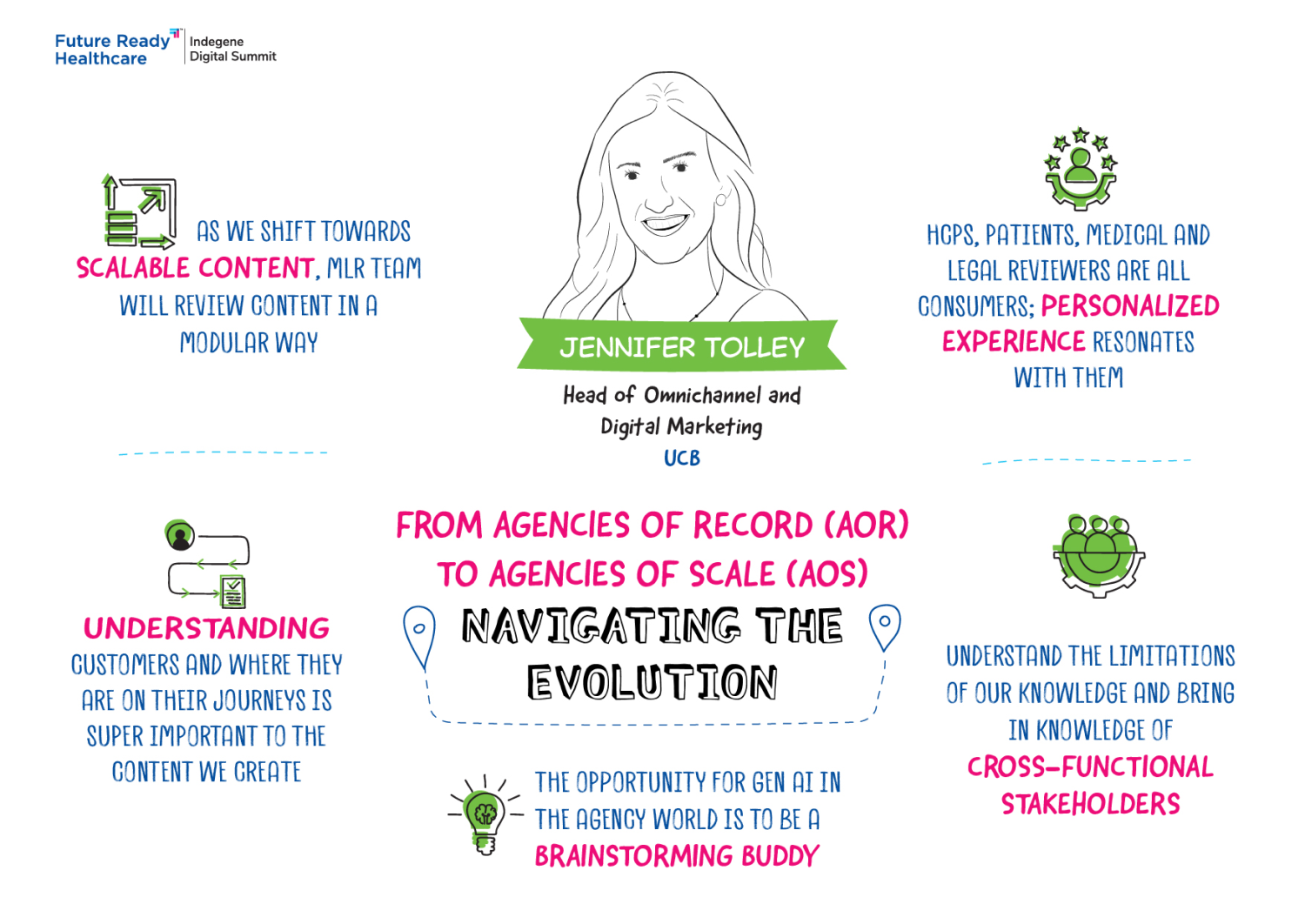
HCPs, patients, medical and legal reviewers are all consumers; personalized experience resonates with them
Collaborate Across Teams And Structures
Effective campaign execution and omnichannel marketing require seamless collaboration across various teams, including analytics, technology and data. Jennifer’s team focuses on both campaign execution (reaching the right customers and optimizing experiences) and long-term capability building (developing omnichannel strategies). Regular cross-functional meetings help align stakeholders on the shared vision and ensure the different departments work cohesively towards common goals.
Understand the limitations of our knowledge and bring in knowledge of cross-functional stakeholders
Augment Humans With AI To Personalize Content At Scale
While AI and automation are often mentioned in discussions about scaling content, Jennifer separates the two. AI is becoming a valuable tool for brainstorming ideas, generating content, and optimizing designs (e.g., analyzing where the human eye naturally focuses in a banner ad). However, there’s always a need for human oversight to ensure that the output is compliant and strategically aligned. For example, while AI can assist in content creation, humans are still necessary to ensure the content remains on-brand and adheres to regulatory standards.
The opportunity for GenAI in the agency world is to be a brainstorming buddy
Automation is seen as a crucial component for scalability, particularly in generating personalized content offshoots from core materials. However, agencies need to balance creativity and scalability. AI might streamline routine tasks, but human input is vital in higher-value creative efforts, such as TV spots or complex print materials.
Scale Creativity Without Losing The Human Touch
Agencies Of Record (AORs) are evolving into Agencies Of Scale (AOS), where the ability to create large volumes of personalized content quickly is vital. To achieve this, agencies must prioritize when to involve senior creative talent and when technology can handle the task. This efficiency enables more personalized content production without sacrificing the quality of core creative materials.
For pharma companies just beginning their transformation, Jennifer advises starting with small, manageable milestones that can drive meaningful results. It’s easy to be overwhelmed by the scale of omnichannel marketing, so focusing on high-impact areas first is key. She also emphasizes the importance of maintaining a learning mindset, staying humble, and remaining curious, as the landscape is constantly evolving.
Jennifer and Jeff’s conversation emphasizes a thoughtful, data-driven approach to omnichannel marketing, balancing the use of AI and automation with the creativity and oversight of human teams. By fostering cross-functional collaboration and continuously learning, pharma companies can scale their content effectively while ensuring relevance and personalization for their audiences.