



This study’s goal is to enable life sciences leaders build future-ready capabilities through peer insights. It helps you with insights on the top attributes necessary to build future-readiness, challenges to building them, and recommendations on how to actually build them.
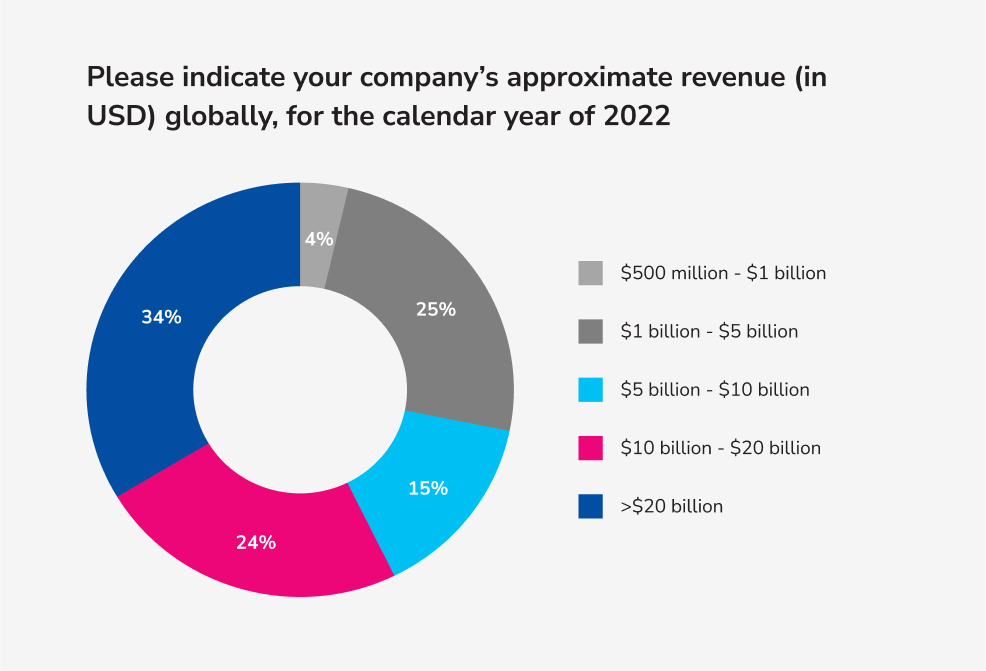
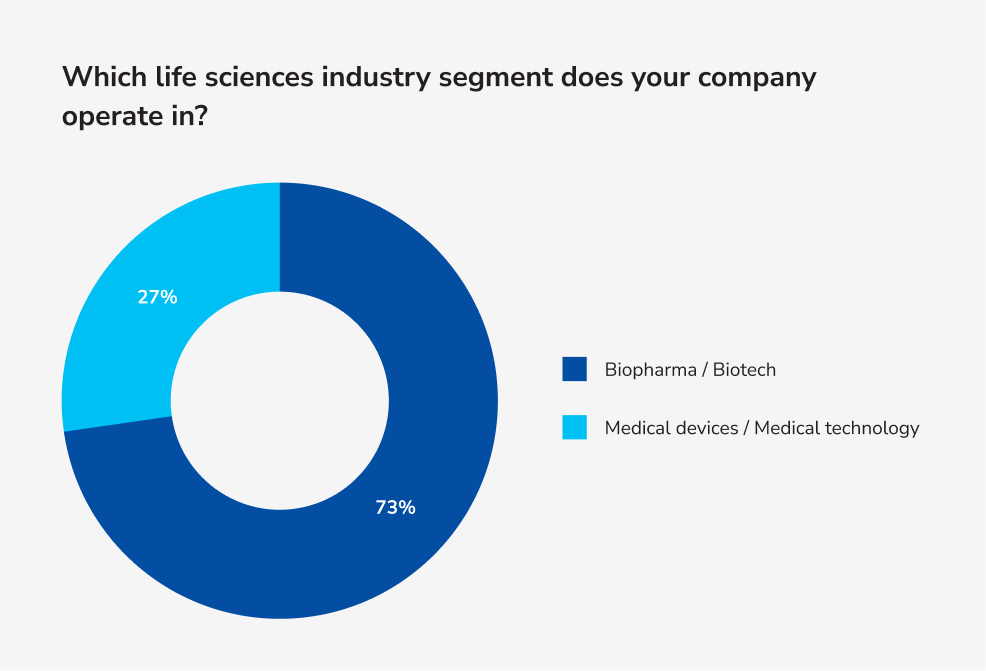
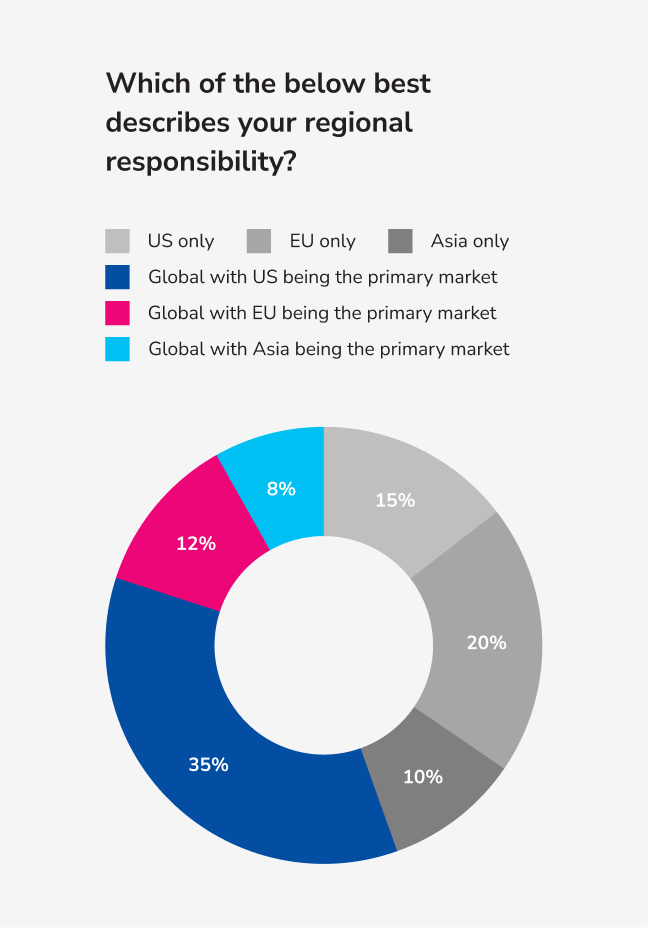
110 life sciences leaders across commercial, medical, clinical and enabling functions responded to an online survey administered between April 27, 2023 to May 24, 2023. They represented biopharma and medical device manufacturers of difference scale and with different geographic responsibility. Some of the survey questions included multiple selection options, so percentage totals do not always add up to 100.
How are future-ready companies defined?
Future-ready companies are agile, resilient companies that are competitively positioned to make the most of the changes in the external environment by building scalable and sustainable capabilities to power innovation, maximize performance and drive growth.
What are the top three attributes of a future-ready company in your opinion?
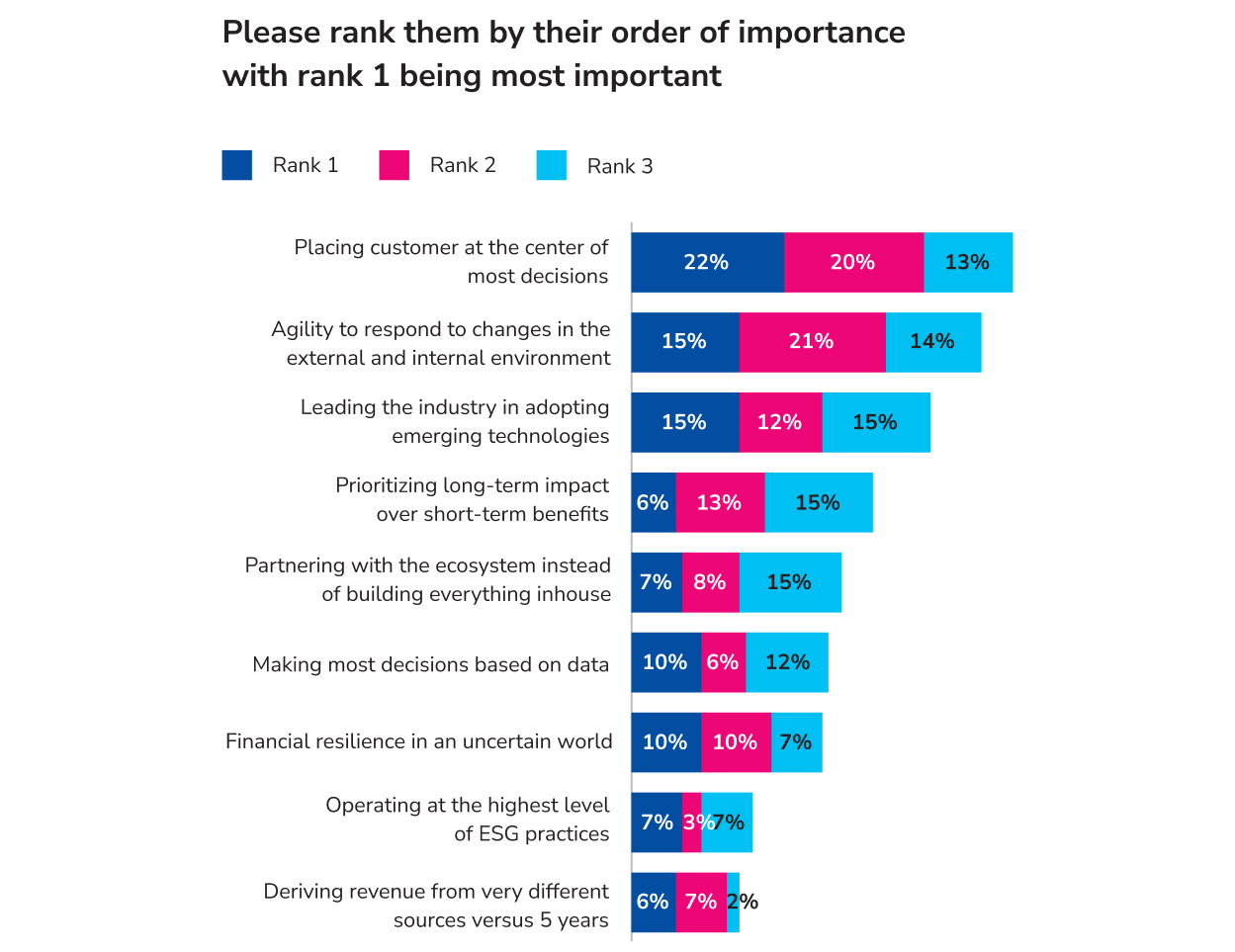
Most leaders rank customer centricity (55%), agility (50%) and emerging technology adoption (43%) amongst the top 3 attributes of future-readiness. Large companies (sales >$10 billion) rank agility amongst their top 3 attributes of future-readiness, but small and mid-sized companies rank customer centricity as theirs.
Read the importance of redefining organizational processes to drive customer-centric omnichannel experiences in the life sciences industry.
To what extent, does your company prioritize the following?
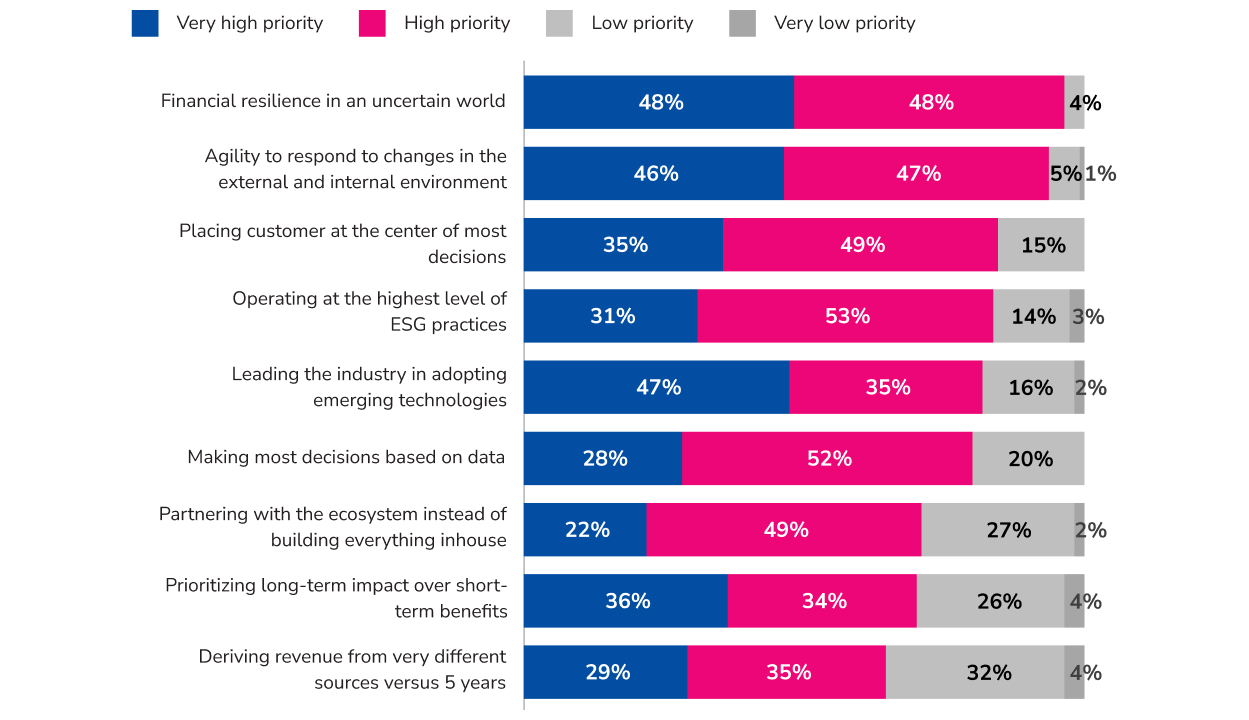
While financial resilience features amongst the bottom 3 ranking of future-readiness attributes, leaders prioritize it the most (96%). Agility (94%) and customer centricity (85%) feature amongst the top 3 priorities as well as attributes of future-readiness. 53% of leaders called out ESG as a high priority, followed by making most decisions based on data.
While CXOs and SVPs place a very high priority on adopting emerging technology, VPs do so for building financial resilience in an uncertain world. Large companies call out financial resilience as their number 1 priority versus smaller ones that prioritize adopting emerging technologies. Life sciences leaders rank deriving revenue from very different sources in the next 5 years amongst their lowest attributes of future-readiness and priorities.
How important are the following motivations to be future-ready in your company?
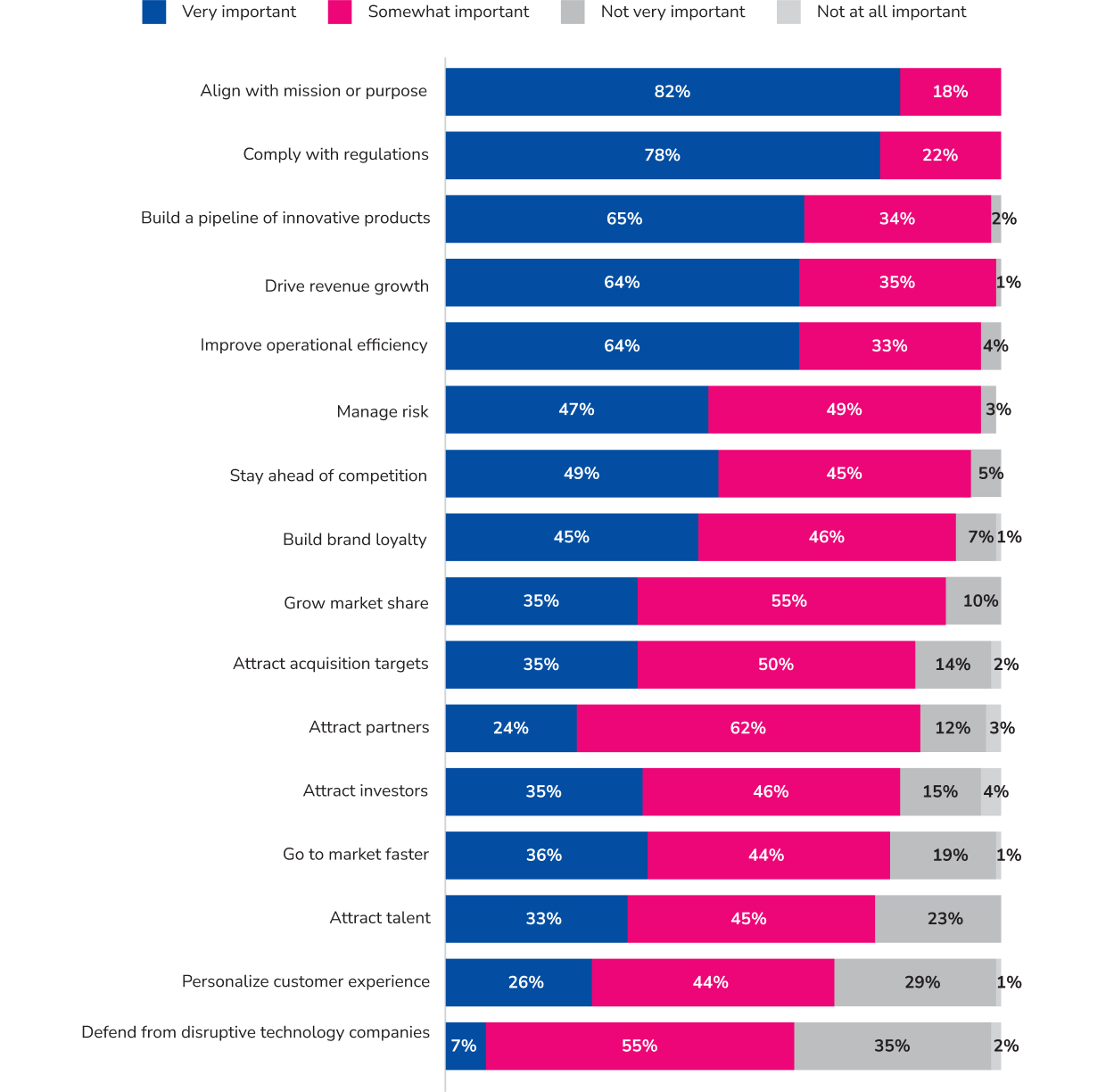
Most leaders believe aligning with their company mission or purpose (82%), complying with regulations (78%) and building a pipeline of innovative products (65%) are very important motivations to be future-ready.
While both small and large companies rank purpose alignment higher, large companies also rank compliance at par. 55% of leaders believe being future-ready is somewhat important to defend from disruptive technology companies.
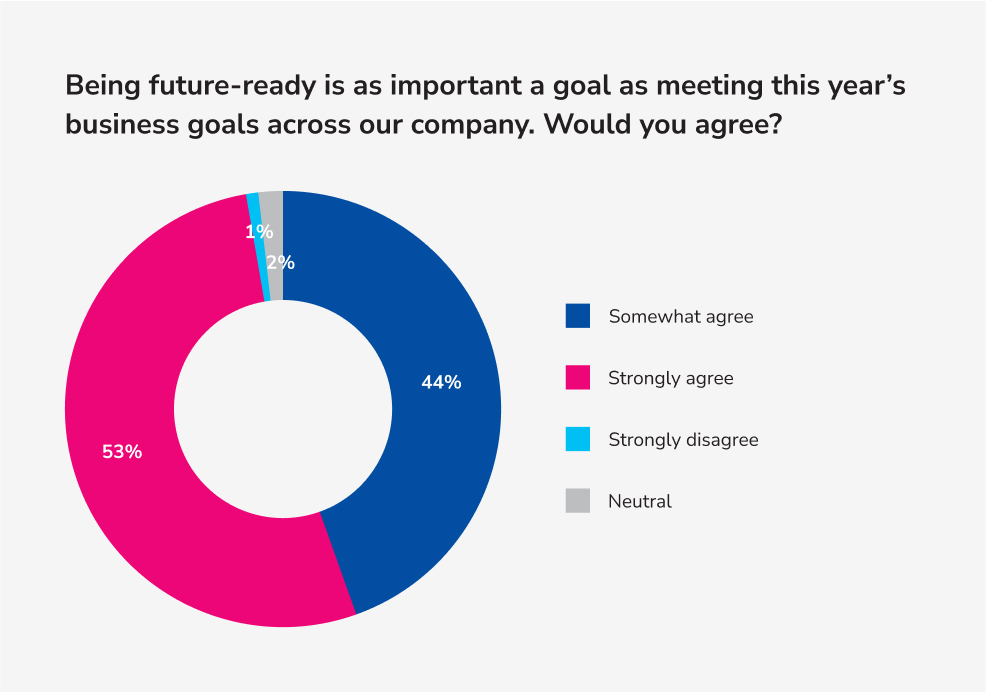
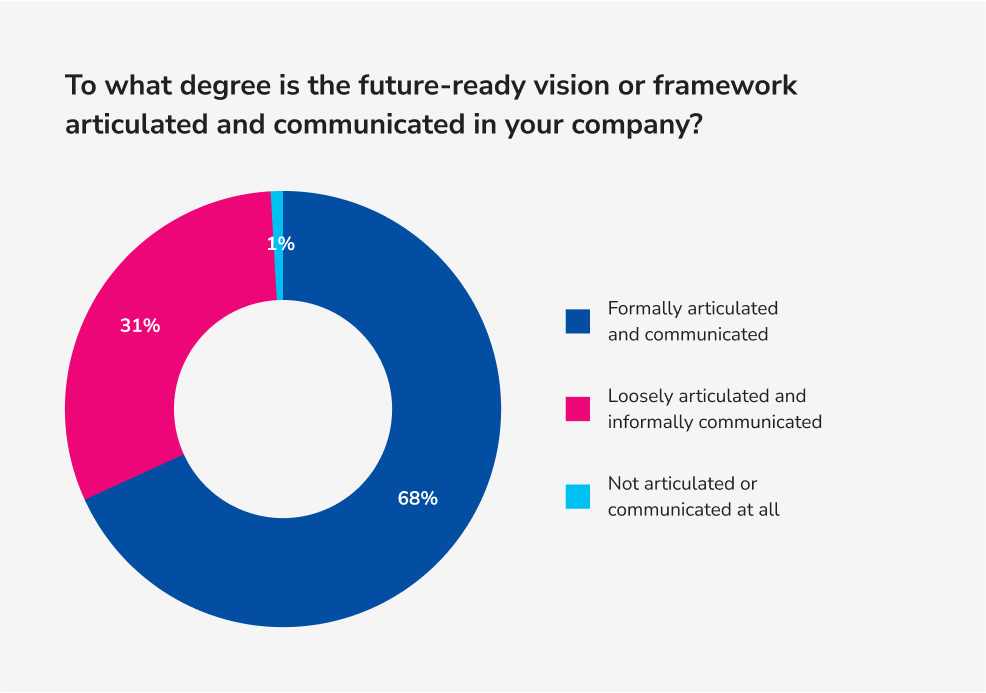
97% of leaders agree being future-ready is as important a goal as meeting this year’s business goals, 31% of them said its vision or framework is loosely articulated and informally communicated across their company.
40% of VPs said their company’s future-ready vision is loosely articulated and informally communicated in contrast to 75% of CXOs who believe it is formally articulated and communicated.
Explore how Indegene's AI solution transformed content creation for a global pharmaceutical organization facing challenges in manual content deconstruction and tagging.
What are the top three challenges to building future-ready capabilities in your company?
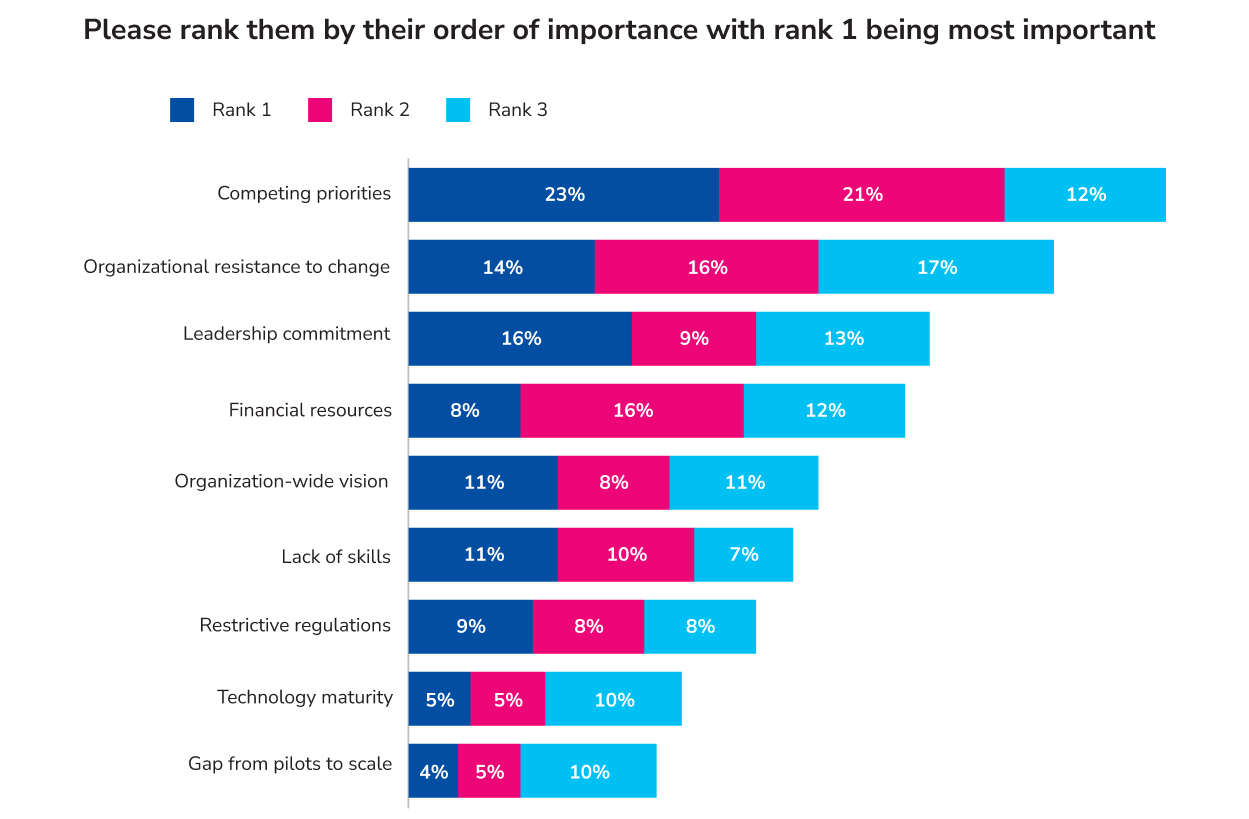
Competing priorities (55%), organizational resistance to change (47%) and leadership commitment (38%) feature amongst the top 3 challenges to be future-ready. CXOs call out organization-wide vision and financial resources as their number 1 challenge to being future-ready versus SVPs who said leadership commitment is their number 1 challenge.
While small companies said a lack of skills is their most important challenge to being future-ready, large companies called out competing priorities as their number 1 challenge. Technology maturity and the gap from pilots to scale are lower order challenges to being future-ready.
How is your company building future-ready capabilities?
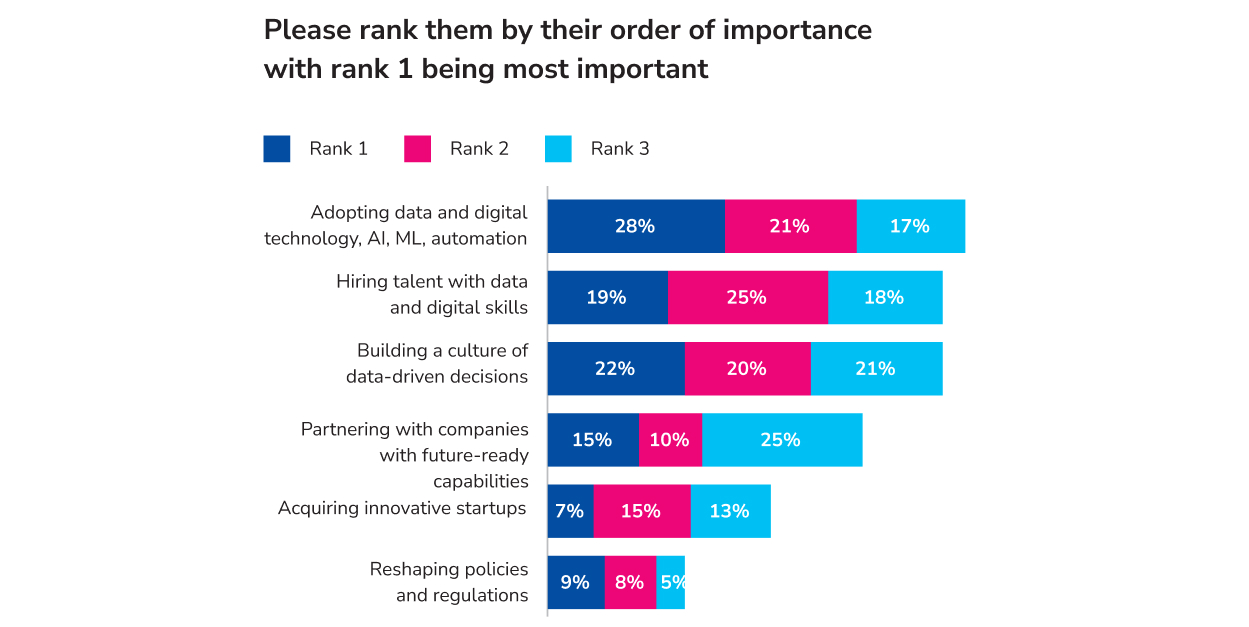
Adopting digital (66%), hiring talent (63%) and building a culture of data-driven decisions (63%) are the top 3 ways through which leaders build future-ready capabilities. While CXOs prefer hiring talent as their number 1 way to build future-ready capabilities, SVPs and VPs prefer adopting data and digital technology. Small companies rank hiring talent as their number 1 method to building future-ready capabilities, large companies do it through adopting data and digital technology.
While 82% of leaders believe workforce productivity technology has a high potential to make an impact in their company, only 42% of them said it received investments. Less than 50% of leaders believe in the potential of 5G, low code/no-code, quantum computing, web 3.0 or blockchain technologies to make an impact in their company, relatively fewer of them get investments in their companies.
To what extent have you adopted the following technologies?
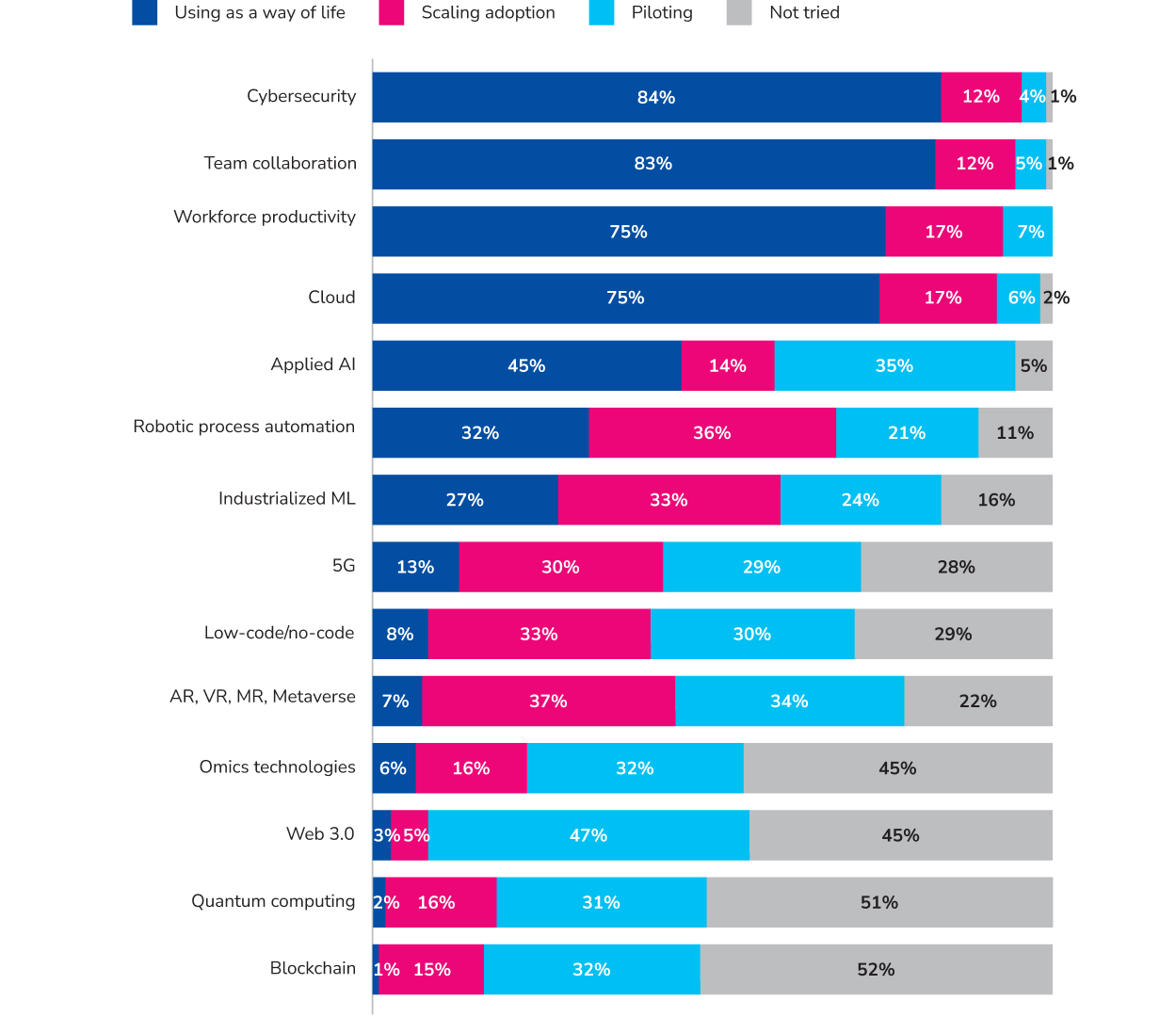
Life sciences companies use cybersecurity (84%), team collaboration (83%), workforce productivity (75%) and the cloud (75%) as a way of life. 95% of the leaders are either using applied AI as a way of life, scaling its adoption or piloting it versus 89% for robotic process automation.
37% of leaders are scaling adoption of AR, VR, MR and the metaverse and another 34% piloting its use cases. About 50% of leaders are yet to try applications that use web 3.0, quantum computing or blockchain technologies.
What are the top challenges to adopting technology in your company?
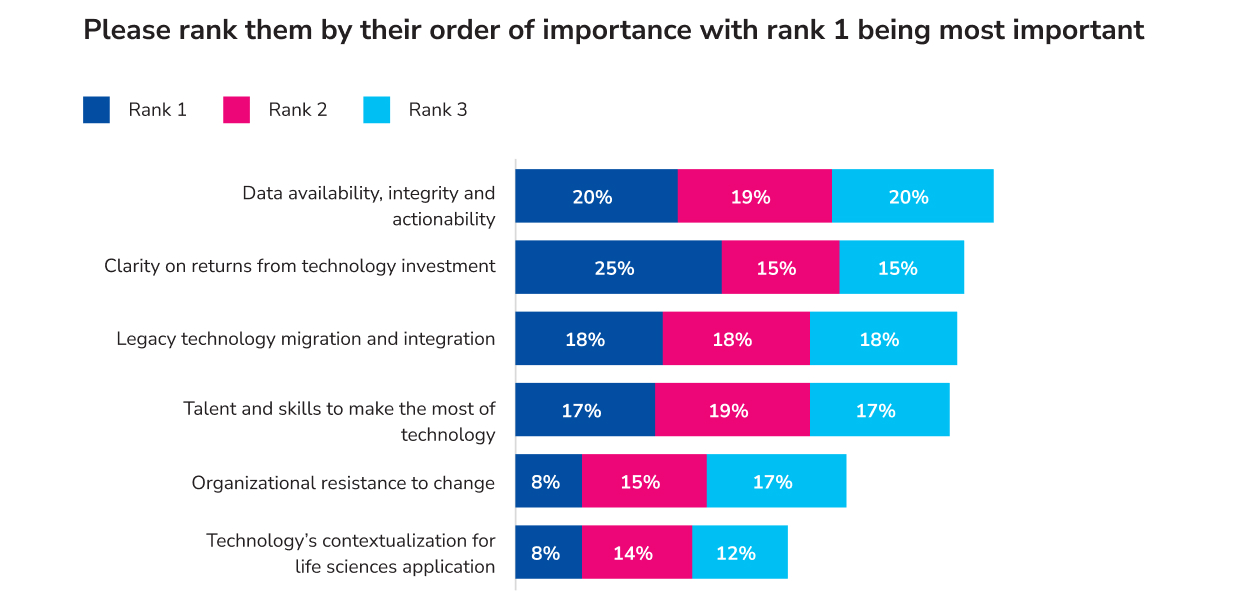
Data (59%), clarity on returns (55%) and legacy technology (55%) challenge most leaders in adopting technology in their company. While CXOs are challenged by data, SVPs and VPs are challenged to justify returns from technology investments. Small companies call out data as their number 1 challenge, but large companies struggle with the talent and skills to make the most of their technology.
Where do you source technology talent from?
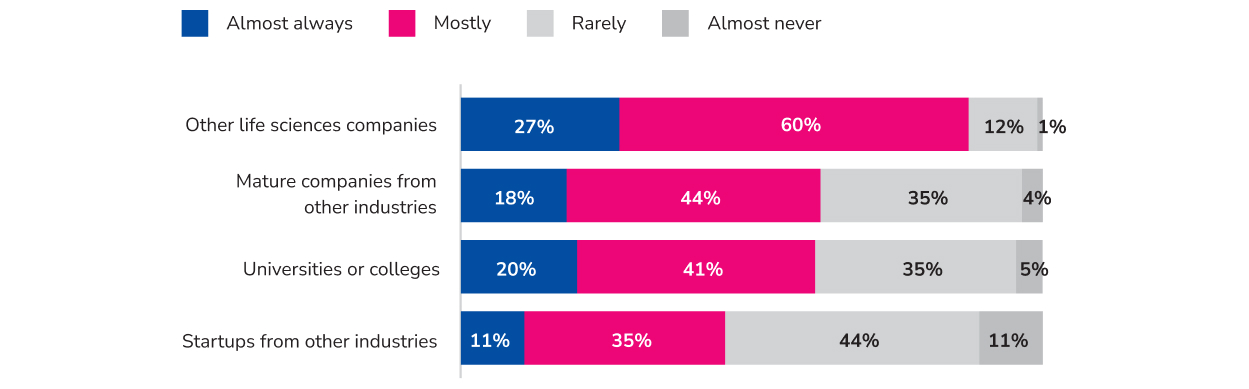
87% of life sciences leaders source their technology talent from other companies in their industry. 62% of them source such talent from mature companies from other industries. They rarely source technology talent from startups from other industries.
What are the top challenges with sourcing and retaining technology talent in your company?
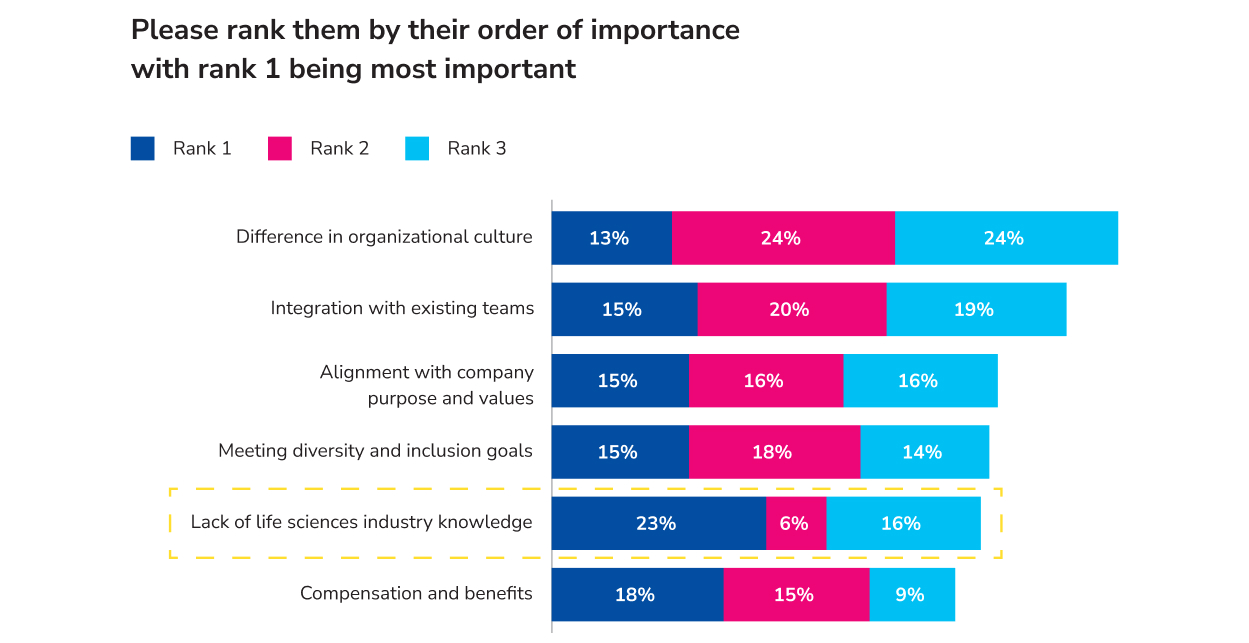
Leaders say differences in organizational culture (60%), integration with existing teams (55%) and alignment with company purpose and values (47%) are the top 3 challenges with sourcing and retaining technology talent in their company.
23% of leaders call out a lack of industry knowledge as the number 1 challenge with technology talent, followed by compensation and benefits (18%). 33% of leaders struggle with meeting their company’s diversity and inclusion goals while sourcing and retaining technology talent.
To what extent do you agree with the following statements about your company?
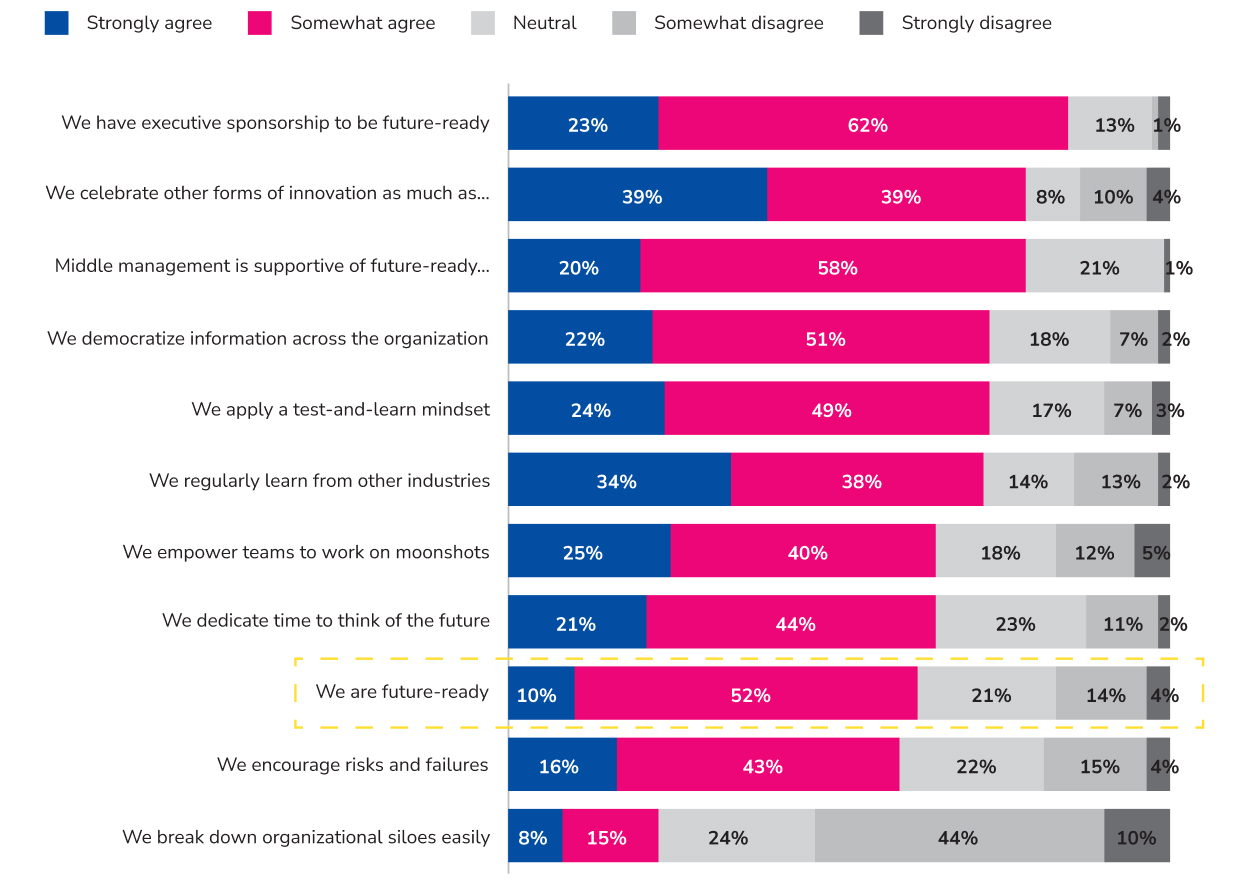
Only 10% of life sciences leaders strongly agree their company is future-ready. While 39% of them believe their company celebrates different forms of innovation and 34% of them regularly learn from other industries, many of them say their company does not encourage risks and failures and do not break down organizational siloes easily. 23% of leaders believe they have the executive sponsorship to be future-ready and 25% of them empower teams to work on moonshots, yet there is limited dedicated time to think of the future.
Four recommendations for life sciences leaders
Embrace true customer-centricity to build future readiness
Life sciences companies take pride in their purpose to make innovative and affordable healthcare accessible around their world. Align your future-readiness vision with this customer, the patient themselves. Rally internal and external stakeholders around the patient, personalize their engagement by leveraging data across the value chain, embrace new technologies and processes to shorten the time from drug discovery to commercialization. This helps bring the right product to the right patient at the right time.
Adopt emerging technology for targeted use cases to stay ahead
As life sciences development-to-commercialization model evolves , adopt emerging technology to modernize every element of the value chain. Leverage RWD, RWE and a decentralized approach to accelerate and improve success rate of clinical trials. Improve the efficiency of regulatory submissions with generative AI-driven insights on new regulations and effective submission authoring. Educate and engage HCPs through granular data on digital affinity to segment and target them effectively and reach them when and where they like to be engaged. Reduce cost and improve quality of pharmacovigilance operations through AI and NLP-driven automation.
Build operations agility and financial resilience to invest in growth
Research and development and sales and marketing costs account for over 40% of a life sciences company’s sales. As compliance requirements grow and new regulations such as the Inflation Reduction Act (IRA) put pressure on margins, drive productivity through automation, an optimal mix of global, regional and local operations, and partnerships with the larger ecosystem. Reinvest the efficiency gains into building a pipeline of innovative products and accelerate clinical development with a modern, data-driven approach. Extend the experimentation and innovation mindset from the left side of the value chain (research and development) to the right (sales and marketing).
Visibly demonstrate leadership commitment and manage change effectively for future success
Life sciences companies are modernizing operations across the drug discovery and research through commercialization continuum. As their talent demographic evolves and life sciences leaders onboard talent from other industries, startups and universities, they need to visibly demonstrate their commitment to being future-ready and manage change effectively. Invest in technologies you truly believe have the potential, complement technology talent with life sciences knowledge, and break down siloes across the organization.