Background
Clinical trials lay the foundation for biomedical research and generate robust evidence on treatments and/or preventive interventions in routine clinical care. Clinical trials directly engage human participants who trust the investigators with utmost scientific and ethical knowledge. Data sharing and transparency are important for the industry to maintain trust and confidence in the public.
Clinical trial data transparency came to light in the late 1990s with the requirement of clinical trial registration. It began with the United States (US) Food and Drug Administration (FDA) modernization Act of 1997, which mandated the establishment of a database for clinical trials of drugs that were treating life-threatening conditions. In 2000, ClinicalTrials.gov was live for patients to access the clinical trial data. Over the last decade, several other milestones were implemented worldwide for maintaining clinical trial transparency and compliance. The World Health Organization (WHO) and the Declaration of Helsinki have also stressed the importance of clinical trial transparency.
Transparency in clinical trials begins from registering a clinical trial on a public database, with access to patient-level data for subsequent analyses and publication of the trial results irrespective of the outcome. Several large pharma companies have initiated transparency methods to ensure that their research practices are compliant with the laws, regulations, and guidelines. Many of them have also collaborated with external medical and scientific researchers to advance their clinical research and thereby enhance public health. Despite the countless efforts by regulators and sponsors to ensure compliance and clinical data transparency for all clinical trials conducted worldwide, only half of the trials have published their results and outcomes. Overall, lack of transparency leads to serious implications for patients, healthcare providers (HCPs), and health systems.
On January 30, 2020, the WHO declared the novel acute respiratory infection caused by the “SARS-CoV-2” virus, termed “Coronavirus Disease-2019 (COVID-19), as a Public Health Emergency of International Concern.
As of July 20, 2020, over 14 million people worldwide are confirmed to be infected, leading to increasing fatality rates. Several pharma companies are conducting indispensable clinical trials to discover that miracle molecule to combat COVID-19.
There are numerous articles published each day on new treatments or diagnoses for this pandemic, but evidence on the efficacy and safety parameters of these interventions seems to have been passed over along the way. Therefore, regulatory authorities and medical professionals are facing difficulty in making decisions on the best treatment options.
In the past, regulators and sponsors have had differences of opinions in publishing their confidential proprietary information and certain patient-level data.
This may be the time to pause and reanalyze whether clinical trial transparency would help mankind overcome this pandemic with the best treatment option available. There are many controversies and diverse questions related to the importance of transparency that are yet to be answered. It is always a debate whether the industry is leading the right track by disclosing or withholding certain clinical trial data.
Transparency accelerates development of new medicines.
Impact of COVID-19 on Clinical Research Industry
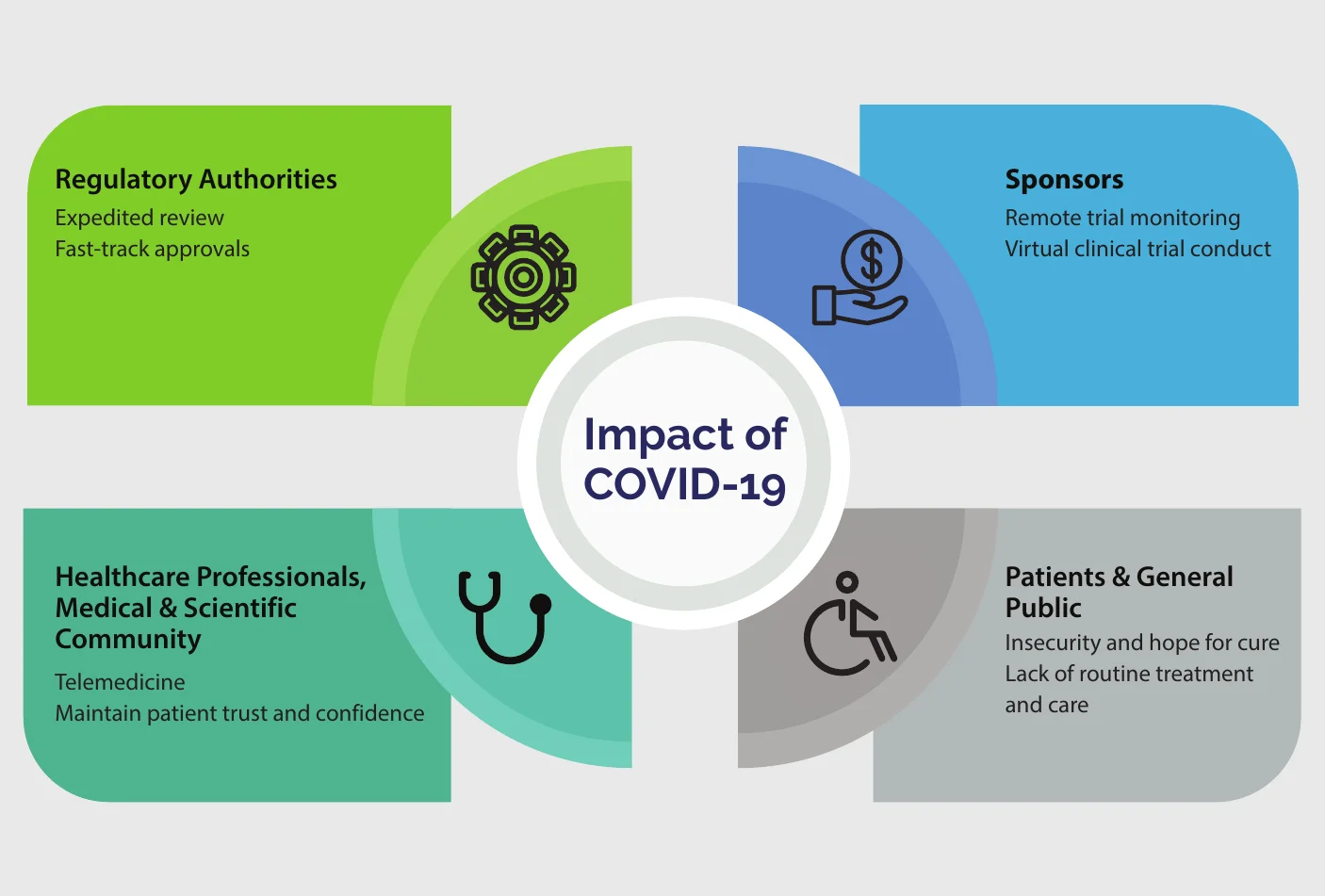
The outbreak of COVID-19 has created a global health crisis and has deeply impacted one’s daily life. Although COVID-19 has impacted the global economy, with several businesses experiencing huge losses, the entire mankind is looking toward the clinical research industry with a ray of hope at the brink of this outbreak. A myriad of clinical trials are being conducted on COVID-19; however, due to lack of published trial data, regulatory authorities and healthcare systems are expressing indecisiveness in the status quo. This could lead to a delay in availability of effective treatment, impacting public health and global economy. Across the industry, regulatory authorities, trial sponsors, HCPs, and patients are facing serious challenges in fighting this pandemic.
Regulatory Authorities
Recently, a number of regulatory authorities including the FDA, European Medicines Agency, Medicines and Healthcare products Regulatory Agency, Health Products Regulatory Authority, and others have released more than 150 guidance documents and dedicated teams of ethics committees to expedite regulatory and ethical review processes to maintain ethical and quality standards. Most of the regulators have also implemented a fast-track approval system considering human safety as priority. For instance, the European Commission also published Recommendation (European Union) 2020/403, considering the shortage of necessities during the outbreak to supply non-CE marked devices in the interest of protection of health, as long as they comply with necessary specifications. However, documentation is the key that would be required for any future inspection purposes.
Some of the key initiatives from the various regulators are mentioned below:
Prioritize, expedite review, and provide fast-track approval for clinical trials marked as COVID-19
Engage ethics committees to ensure patient safety concerns
Support sponsors to amend any existing trial protocols or suspend trials if possible
Encourage sponsors on remote trial monitoring and providing investigational medicinal products (IMPs) to trial participants
Report serious adverse events and submit annual safety reports and end-of-trial notifications
Provide waivers as necessary in case of protocol deviations and serious breaches
Regulatory bodies are working closely with the innovators/sponsors to foster the development of safe and effective medical counter measures against the COVID-19 pandemic. They are under extreme pressure to ensure that the best treatment options are available at the earliest to protect public health and safeguard the public from the use of fraudulent products claiming to prevent, treat, or diagnose COVID-19. Despite several initiatives from regulatory authorities, many of the ongoing clinical trials are unregistered, and their data continue to be unavailable to both the general public and the scientific community. In addition, some trial data are not shared with the regulators appropriately, leaving them handicapped in the drug approval process and, in turn, to serve mankind.
Sponsors
Currently, there are no FDA-approved medical products for the prevention or treatment of COVID-19, and innovator pharma companies are striving to find a potential drug candidate in record time. Globally, over a hundred potential vaccine candidates have been proposed to the WHO, and only a few are in the clinical evaluation stage. Certainly, technology and digital information could be the key to such rapid changes in the industry. Although there is room for flexibility, pragmatism, and speed, it is also important for sponsors to adhere to quality, efficacy, and safety to promote the well-being of mankind.
A whole new era of conducting virtual clinical trials is underway, and it is a great deal of responsibility for the sponsors to maintain patient safety and data integrity. Companies are evolving with capabilities and improving methods on real-time data capturing. Moreover, companies have deployed methods such as at-home care and remote monitoring to minimize the impact on ongoing clinical trials.
FDA guidance issued in the context of COVID-19 also states that it is important to report the changes implemented during the trial in the wake of the pandemic. Henceforth, it is crucial for the sponsors to stay abreast of actions or guidelines of their local or regional regulatory agencies and to document every action. Meanwhile, sponsors should engage with researchers, HCPs, and patients to disclose data appropriately.
Healthcare Professionals, Medical and Scientific Community
During this COVID-19 outbreak, HCPs and research scientists are in continuous search of a remedy to provide quality treatment to their patients and improve their quality of life. At the same time, they also have to ensure that preventive medicine is in place to protect general public safety. There are several challenges that investigators and HCPs are currently encountering to maintain patient trust while prioritizing patient safety:
Lack of movement due to government-enforced lockdowns in several countries
Implementation of telemedicine and telehealth systems
Constant communication with patients
It is therefore important to maintain transparency at all stages of research as it helps HCPs to choose the right medicine and provide utmost care and treatment to their patients.
Patients and General Public
The COVID-19 outbreak has left the general public clueless about their health and safety. Incomplete information about clinical trials and available treatment options are causing anxiety and confusion in the society.
Several patients with chronic diseases, who are also trial subjects, and their caretakers are at a dilemma on their future care and treatment as many ongoing clinical trials are being suspended or halted for safety concerns.
Patients may be required to self-isolate, causing more difficulty for investigators to maintain medical oversight. In today’s world, patients along with the general public are also demanding access to the trial results in the hope of a cure to this pandemic.
Owing to the lack of clinical data transparency, patients tend to lose trust in their physicians and become extremely demotivated and insecure, leading to psychological and behavioral changes.
Transparency? It is the right thing to practice.
Importance of Clinical Trial Transparency During the COVID-19 Pandemic
During this crucial time of the pandemic, research scientists and pharma companies are prompted to dive deep to find a solution to this novel viral infection while patients are also demanding clinical trial information. In the urgency of the situation, it is also of utmost importance for the sponsors to comply with regulations and publish the clinical trial observations in a timely manner on a publicly accessible registry.
Below are a few best practices that could certainly benefit the clinical research industry and ultimately the whole world.
Regulatory Authorities: Availability and disclosure of full clinical trial data should be made in a timely manner to take the right decision during the drug approval process. This will ensure that the best treatment option is available at the earliest to overcome this global health crisis.
Pharma Industry/Sponsors: Clinical data transparency could avoid duplication of research work and unnecessary financial losses while encouraging improvement in the design, conduct, and oversight of clinical trials, thereby providing appropriate diagnosis, treatment, and prevention for COVID-19.
HCPs and Medical Community: Appropriate disclosure of clinical trial data will help the medical community to take the right decision ahead of time by choosing the most appropriate treatment and prevention strategy for COVID-19. This will further enhance the confidence and trust in the entire healthcare system.
General Public Including Patients: Access to real-time data for the general public will build confidence in the existing healthcare system and security of their own health. This could motivate the common people to fight against such an outbreak.
Guidance for Transparency: Trial Registration, Data Disclosure, and Reporting Practices
As per the US Final Rule (effective from January 18, 2017) for Clinical Trials Registration and Results Information Submission (42 CFR Part 11) and Section 801 of the FDA Amendments Act (FDAAA 801) implemented in 2007, it is important for the sponsors to register clinical trials on drugs, biological and device products and submit their results to the clinicaltrials.gov registry. Similarly, the Clinical Trial Regulation (EU) No 536/2014 implemented a portal to register trials on the database to ensure transparency of clinical trials conducted in the European Union.
According to the WHO best practices, every clinical trial result should be uploaded in the respective local trial registry no later than 12 months after trial completion.
The regulations are enforced for the benefit of the sponsors, regulatory authorities, HCPs, and patients. This could further enhance public confidence in the clinical trial process, medicines, and regulatory system and help HCPs in deciding treatment options. These measures are fostered to accelerate further research by accumulating knowledge and technical ability. Therefore, duplication of trials, safety or efficacy failures, redundant data, and workforce investment in research may be avoided and could stimulate growth and development of commercial and academic research centers, medical facilities, and expertise.
The US FDA guidance document implemented in March 2020, with the current revision in June 2020, provides insights to the sponsors and investigators to maintain compliance with good clinical practice (GCP) and minimizing risks to trial integrity.
Navigating a New Regulatory Landscape
The clinical research industry is adapting to a rapid change which has been accepted at all levels, starting from the regulatory authorities, sponsors, contract research organizations, and trial sites to the patients or trial subjects. There is more room for new technologies and start-up inventions to address increasing needs on clinical trial data sources and to remotely connect with patients.
Clinical trials are mostly patient-centered, and before long, the industry will be efficient in conducting clinical trials virtually with connected devices, medications delivered at home, and timely virtual communication, therefore achieving accurate data capturing and transparency and, at the same time, gaining and improving patient trust. Overall, the potential downside of increasing dependence on technology would be that it cannot replace human interaction and deliver the physical care provided by doctors in person.
Conclusion
COVID-19 is a severe ongoing novel pandemic that has caused immense social and economic regression across the globe. Pharma companies worldwide are under public and competitive pressure to explore their innovation on drug development and revamp their reputation.
Because of this increasing need for self-care and prevention, mankind is getting more dependent on technology, and sponsors are implementing decentralized and stay-at-home clinical trials. Therefore, the use of technology could further overcome ethical and regulatory barriers to enhance patient safety and trial data integrity compared with traditional trial designs. However, the lack of human connection may not be always convincing and should be taken into consideration.
A pandemic such as the COVID-19 definitely demands transparency in clinical trials. The lack of full conclusive scientific evidence from the various ongoing trials could lead to ignorance of an effective treatment to curb the spread of the disease.
Although there are various regulations and policies in place, sponsors and companies are still striving to understand the scope with regard to the depth of disclosure of trial plan or outcomes.
It is important for companies to hold the expertise and to meet the regulatory and local requirements. Generally, bigger pharma companies are able to meet their compliance obligations with a dedicated team and requisite tools compared with smaller companies who may lack the resources to disclose data appropriately. Nevertheless, smaller companies are gradually paving their way to gain the requisites. Compliance also values credibility and reputation of the company.
Therefore, it is critical to report any observations and publish the trial results appropriately to avoid any gaps and bag an effective treatment or solution to this global disaster. The future of clinical trials could be overwhelming if we consolidate the advances and proceed toward greater data transparency.
At Indegene, a team of experts provides a wide range of solutions in the field of regulatory intelligence and affairs, trial registrations, results posting, clinical data analytics, commercialization, literature publication, and submission services.
Together, let us work around the silver lining amid COVID-19!
About the Authors
Dr. Kumari Priyanka, BDS, PGDCR
Manager – Regulatory Solutions
Dr. Priyanka has over 15 years of experience in the clinical and pharma sector. A dental surgeon by profession with a postgraduate diploma in clinical research, Dr. Priyanka has around 7 years of experience in clinical practice and another 8+ years of experience in various aspects of Clinical Research.
She is currently leading the Regulatory department at Indegene Pvt Ltd. She has extensive experience in managing large teams and building processes and capabilities. Her core area of expertise includes providing Regulatory Intelligence, Strategic Consultation, Regulatory Submission, and Clinical Trial Disclosure services to various clients across geographies and product lines. She is adept at ensuring quality and compliant protocol registrations and results postings as well as alignment with global registries (Clinicaltrials.gov, EU registry, CTRI, etc). She is proficient in addressing and resolving health authority queries received from different country registries.
Tejas Thomas, MSc, PGDCR
Senior Regulatory Associate
Tejas Thomas has a Master’s degree in Microbiology and holds a post graduate diploma in clinical research and data management. She has about 10 years of varied experience in the clinical research industry, of which 7 years of core experience lies in Regulatory and Medical writing, regulatory intelligence, and clinical trial disclosures.
Currently, Tejas is managing end-to-end disclosure services at Indegene Pvt. Ltd. Her current responsibilities include collaboration with different clients in disclosure planning, tracking workflow related to trial transparency, and ensuring timely and accurate disclosure of clinical data as required by the international law/guidance policy. Her expertise and proficiency in varied fields ensure quality deliverables across services.
From Promise To Performance.
Trusted by all 20 of the world's top 20 pharmaceutical companies, Indegene helps life sciences organizations accelerate outcomes across the entire value chain.