


Online privacy is a growing concern for internet users in the wake of data breaches, cyberattacks, and rising digital surveillance. Yet for many users, cookie consent and identity resolution remains unclear, and interactions with banners often feel like box-ticking exercises rather than informed choices.
Cookies are small pieces of data stored in a browser which enable websites to remember preferences, logins, and browsing history. They also allow brands to deliver personalized experiences, from relevant ads to tailored content. But without transparency, this tracking can feel intrusive, raising concerns about privacy, identity, and trust.
For industries like pharma and life sciences, the challenge is sharper. Privacy compliance in life sciences is non-negotiable, yet organizations must also embrace life sciences personalization to meet rising expectations from HCPs and patients. This is where cookie consent and identity resolution strategies become critical to help companies strike the right balance between compliance, privacy and personalization for customer experience.
By building this balance into their digital ecosystems, pharma and life sciences organizations can promote trust, safeguard data, and deliver personalized experiences that respect user choice.
What Is Cookie Consent and How Is It Used?
Cookies are typically small text files that are stored on the browsers or devices of users. Cookies have a varied set of functionalities, from helping websites function properly, remembering user settings to enhance user experience, to delivering targeted advertising.
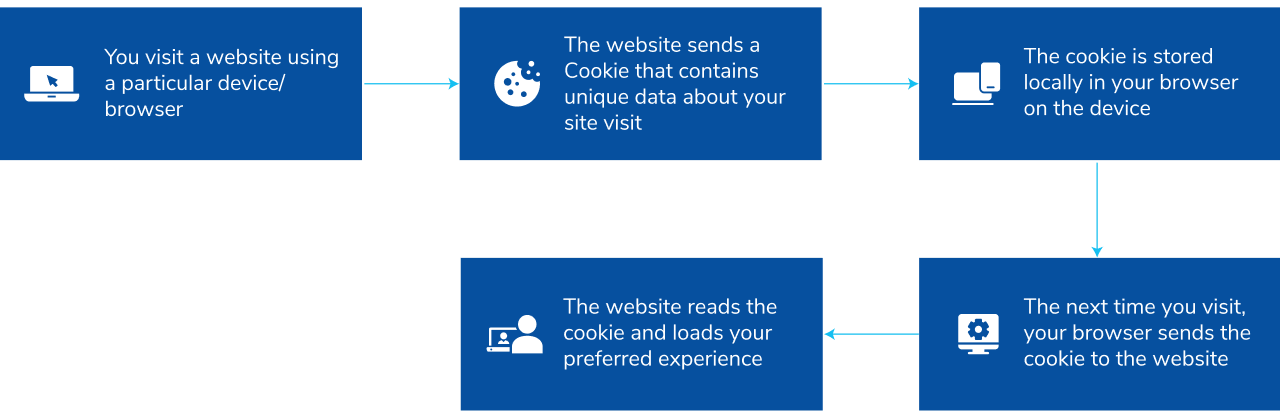
There are different types of cookies and tracking technologies, each with different purposes and lifespans. Some of the most common ones include the following:
Session cookies: These cookies are temporary and expire when the user closes the browser or leaves the website. They are used to store information about the current session of the user, such as login status, shopping cart items, or form inputs.
Persistent cookies: These cookies remain on the browser or device of the user until they expire or are deleted by the user. They are used to store information that persists across multiple visits, such as user preferences, browsing history, or interests.
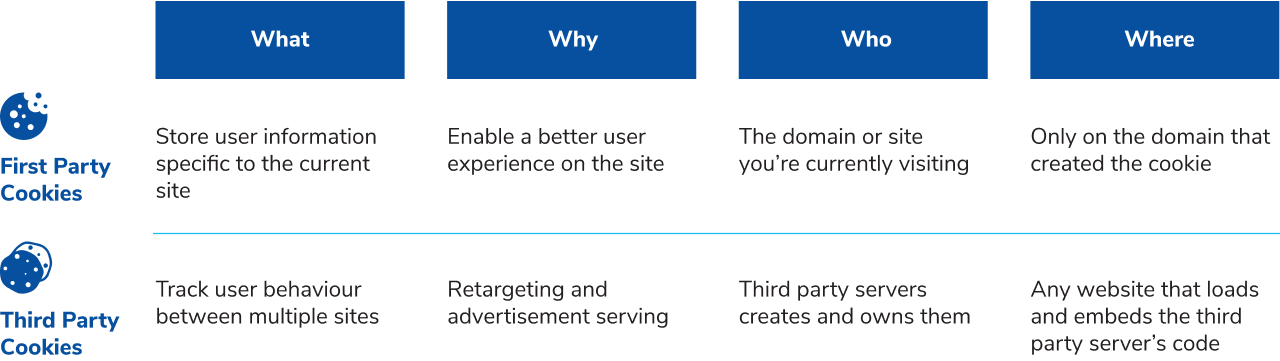
First-party cookies: These cookies are set by the website that is visited by the user. They are used to provide functionality and services specific to that website, such as language settings, authentication, or personalization.
Third-party cookies: These cookies are set by external services or domains that are not controlled by the website that the user is visiting. They are used to provide functionality and services that are shared across different websites, such as analytics, social media features, or advertising networks.
Pixels and web beacons: These are tiny images or code snippets that are embedded in web pages or emails. They are used to track user actions, such as opening an email, clicking on a link, or visiting a website. They can also collect information about the device, browser, location, or IP address of the user.
Referrers: These are data elements that indicate where the user came from before visiting a website. They can be part of the URL or the HTTP header. They are used to measure traffic sources, such as search engines, social media platforms, or other websites.
Global Cookie Consent Laws and Their Impact on Life Sciences
In our previous sections, we discussed how governments across the world are introducing laws/guidelines for proper cookie consent and preference management. These cookie consent laws vary depending on the location of the website owner and the user, but generally require obtaining user consent, providing clear and transparent information, respecting user preferences, and ensuring data security.
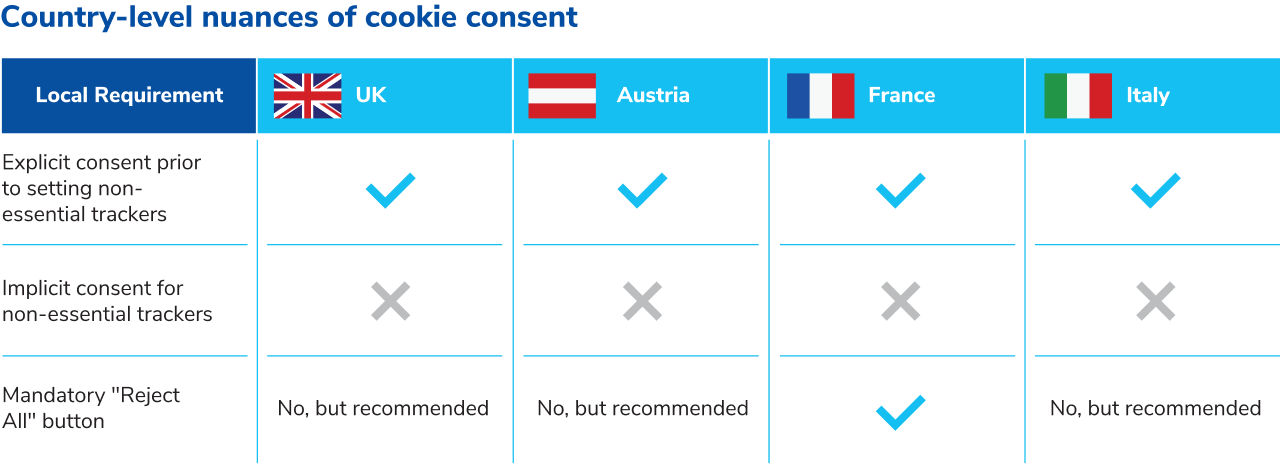
Some examples of global cookie consent laws and data privacy regulations that govern cookies, tracking technologies, and privacy compliance in life sciences are as follows:
ePrivacy Directive (EU Cookie Law):
This directive applies to all EU member states and requires website owners to obtain user consent before using any cookies or similar technologies that store or access information on the devices and browsers of users.
General Data Protection Regulation (GDPR):
This regulation applies to all EU member states and protects the personal data of EU citizens. It requires website owners to obtain user consent before using any cookies or similar technologies that collect and store the personal data of users.
California Consumer Privacy Act (CCPA):
This law applies to businesses that operate in California or target California residents. It grants users the right to know what personal information is collected by businesses, how it is used and shared, and how to opt out of the sale of their personal information.
Personal Information Protection and Electronic Documents Act (PIPEDA):
This law applies to businesses that operate in Canada or target Canadian residents. It requires businesses to obtain user consent before collecting, using, or disclosing their personal information; to limit the collection, use, and disclosure of personal information to what is necessary; and to protect personal information from unauthorized access, use, or disclosure.
Strengthening Privacy Compliance with Consent Management Platforms
A Consent Management Platform (CMP) is a software tool that, along with other functionalities, makes it easy for websites to follow cookie regulations. All CMPs broadly enable cookie consent through a combination of the following steps:
Scanning the web property and detecting all the cookies and trackers that are present.
Auto-categorizing (also in most cases letting the website owner recategorize these cookies) them according to their purpose and origin (eg, essential, functional, analytical, advertising, and third-party cookies).
Allowing the website owner to define and configure a cookie policy, category descriptions, or individual cookie descriptions that explain which types of cookies are used, why they are used, and how users can manage them.
Displaying a cookie consent banner or popup that informs users about the use of cookies, asks for their consent before setting any non-essential cookies, and allows them to customize their preferences.
Storing and updating the consent records at a local browser level and ensuring that only the cookies that have been consented to are set on the device and browser of the user.
Adapting to the location and language of the user and applying the relevant legal requirements for each region.
At Indegene, one of the CMPs we often work with to enable our life sciences personalization initiatives is OneTrust. The OneTrust cookie solution, in addition to offering all the features mentioned above, is a cloud-based platform that provides pre-built templates for multiple cookie consent laws and privacy regulations, including GDPR, CCPA, LGPD, and the ePrivacy Directive. It also integrates with various tag management and content management systems to support privacy compliance in life sciences and enable seamless cookie consent and identity resolution across domains.
Read how Indegene enabled enterprise consent management for a global biotechnology company, managing and validating consent for 17,000+ HCPs.
Some of the benefits of using OneTrust as a CMP are as follows:
OneTrust automates the cookie scanning process and provides accurate and up-to-date information about all cookies and trackers on the website.
It allows users to create customized and branded cookie consent banners or popups that match their website design and tone.
It offers cookie consent banners in 46 languages and automatically adapts to the location and browser settings of the user.
It enables users to easily manage their cookie preferences and change them at any time.
It provides a dashboard that displays the consent status and statistics for each website domain.
It maintains a secure and auditable record of consent for each user and provides reports on compliance performance.
Other options for CMPs include the following:
CookieYes: Another strong cookie consent system that can be integrated into all of the major content management systems.
Cookiebot: A hosted CMP that offers cookie consent banners in 46 languages.
TrustArc Cookie Consent Manager: Another robust cookie management platform that can be used to quickly set up a compliant web experience.
Getting Cookie Consent Right in Life Sciences and Pharma
At Indegene, we worked with a large US-based biopharmaceutical customer to enable cookie consent for more than 10 websites across the United States, the EU, and APAC. This included working closely with business, legal, and website teams to understand their brand guidelines, map legal, and compliance requirements; to document the languages and categories to be configured; and to configure the consent management solution as well as provide ongoing operations.
We believe a strong cookie consent management solution is much more than just a platform. It is a carefully architected mixture of the right platform, skilled specialists, and robust processes.
Life Sciences Personalization: Beyond a Robust Consent Platform
KPIs
Consent Outcomes
Improve user experience on brand websites
Measure and improve consent rate
Enable personalized customer journeys
Ensure complete regulatory compliance
People and processes
Consent Operations
Continuous listening (regulatory and compliance changes)
Frequent website scans
Tracking technology audits
Cookie category and policy management
Third-party cookie management and blocking (as required)
Consent reporting and dashboarding
Multivariant testing (consent rate optimization)
Platforms
Consent System
Implementing cookie banners on websites for consent collection
Enforcing consent adherence mechanisms
Cookie preference management
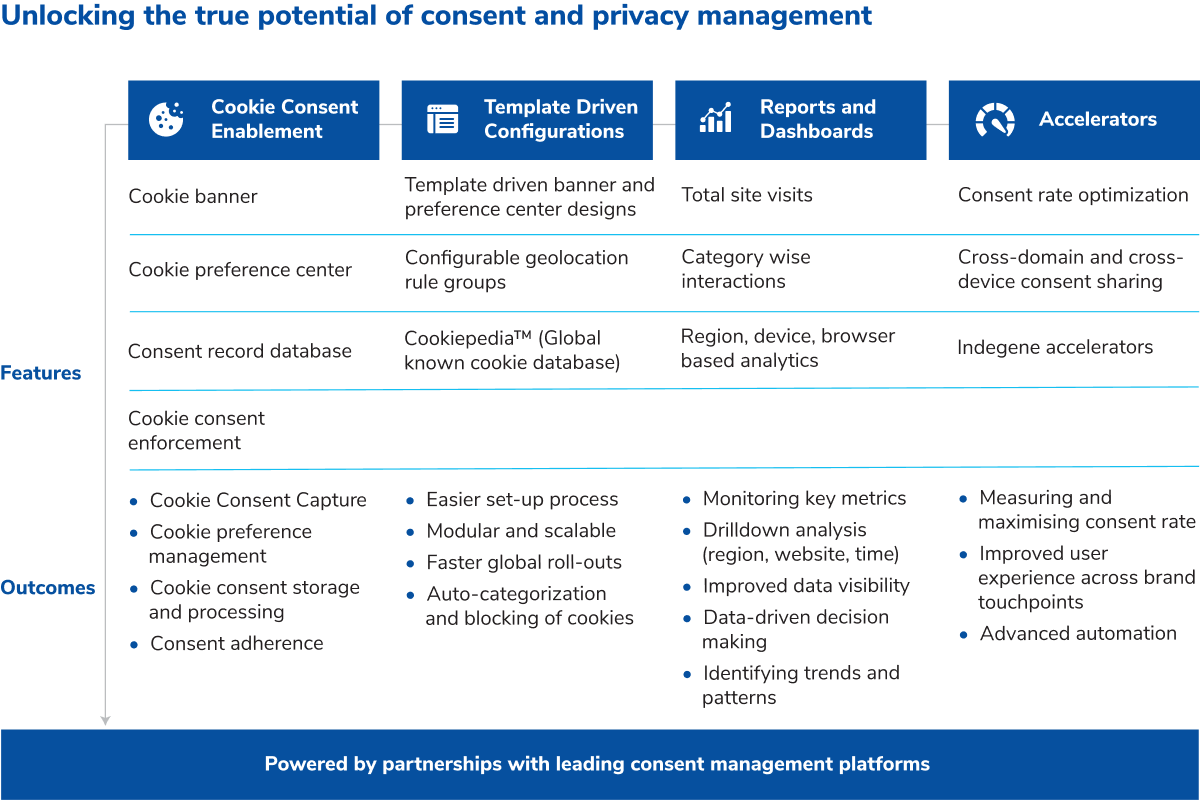
Through a standard, framework-driven approach, user consent and preferences can be collected and enforced in a compliant manner. The right combination of technology expertise, industry knowledge, and regulatory insight along with pre-built accelerators, can unlock the true potential of a cookie CMP. This not only supports privacy compliance in life sciences but also enables the rapid launch of new web properties and quick compliance updates to existing ones.
Read more about a modern Customer Identity and Access Management (CIAM) solution that unifies identity, access control, security, and privacy in one framework.
The Future of Cookie Consent and Identity Resolution in Pharma
Now that we know what a typical CMP offers, let us take a look at some of the newest trends in cookie consent management, which is gaining more importance as data privacy regulations and user expectations evolve. These trends include:
Cross-domain and cross-device consent: This is the ability to obtain and synchronize user consent across multiple domains and devices, such as websites, apps, and smart TVs. This can help to create a consistent user experience and avoid consent fatigue. However, it also poses technical and legal challenges, such as ensuring user identity and compliance with different jurisdictions.
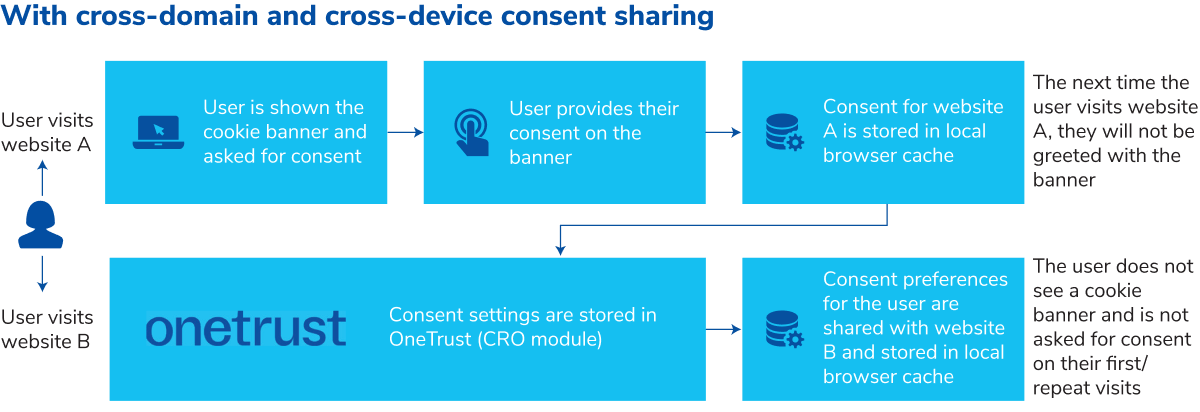
Consent rate optimization: This is the practice of optimizing the design and placement of cookie consent banners and popups to increase user engagement and consent rates. Some of the factors that can affect consent rate optimization are the timing, size, color, wording, and options of the consent request; the use of incentives or nudges; the level of granularity and transparency; and the testing and measurement of different variations through A/B testing.
Referrers: These are data elements that indicate where the user came from before visiting a website. They can be part of the URL or the HTTP header. They are used to measure traffic sources, such as search engines, social media platforms, or other websites.
Audience logic: This is the use of user consent data to segment and target audiences on the basis of their preferences and behaviors. Audience logic can help advertisers and publishers to deliver more relevant and personalized content and advertisements, while respecting user privacy and choice.
Integrated analytics: Integrated analytics anonymously captures user interactions with the banner and provides the web owner with an easy-to-understand visual dashboard of the consent banner/preference center for their websites.
These trends reflect the growing need for advanced CMPs that can provide features such as granular consent options, integrated analytics, multilingual support, and seamless user experience (UX) integration. Advanced CMPs can help businesses to not only ensure compliance with data privacy laws but to also enhance user trust, informed decision-making, and global reach.
Building Blocks of a Strong Cookie Consent Strategy
A strong cookie consent solution that is implemented correctly enables continuous listening, meaning that your organization is always up-to-date with market nuances and guidelines on regulatory compliances. Backed by configurable deployments, this solution enables granular opt-in/opt-out and preference detail capture, as well as ensures compliance with regulations such as CCPA and GDPA.
A robust cookie consent solution also offers scalability through templates and automation, which streamlines operations and improves time-to-market, allowing for continued success. Flexible geo-location setup to enable different experiences for visitors from different parts of the world without the need to build different cookie banners as well as continuous analytics and insights is the key to drive scale.
Regular handshakes between different groups both within and outside the organization help to promote transparency and consistency in consent processes, which are the key factors to a strong consent architecture that instills trust among stakeholders.
A dedicated consent desk, as the all-encompassing people layer, provides support for brand requests, query resolution, compliance monitoring, and audit support that future-proofs your consent management practices.
A modular, scalable and robust enterprise consent solution supports
Continous listening
Configurable deployments and scalability
Handshakes
Consent desk
The Path Forward for Cookie Consent in Life Sciences
In conclusion, as online privacy concerns continue to rise, finding a balance between personalization and privacy is crucial. Cookies play a significant role in enhancing user experiences, but it can also be a threat to privacy if it is not carefully managed. By implementing robust consent management solutions, websites can comply with regulations, build trust with users, and ensure a safer online environment.
Future trends in cookie consent management, such as cross-domain consent and consent rate optimization, further underscore the importance of continuously evolving consent practices around a capable consent management platform. Indegene provides tailored solutions, combining people, processes, and platforms for long-term marketing success. Talk to us to learn more.