The introduction and integration of Generative AI (GenAI) heralds an era of a pivotal transformation in the life sciences industry. This technology promises the potential to transform the industry by enhancing efficiency, effectiveness, and innovation.
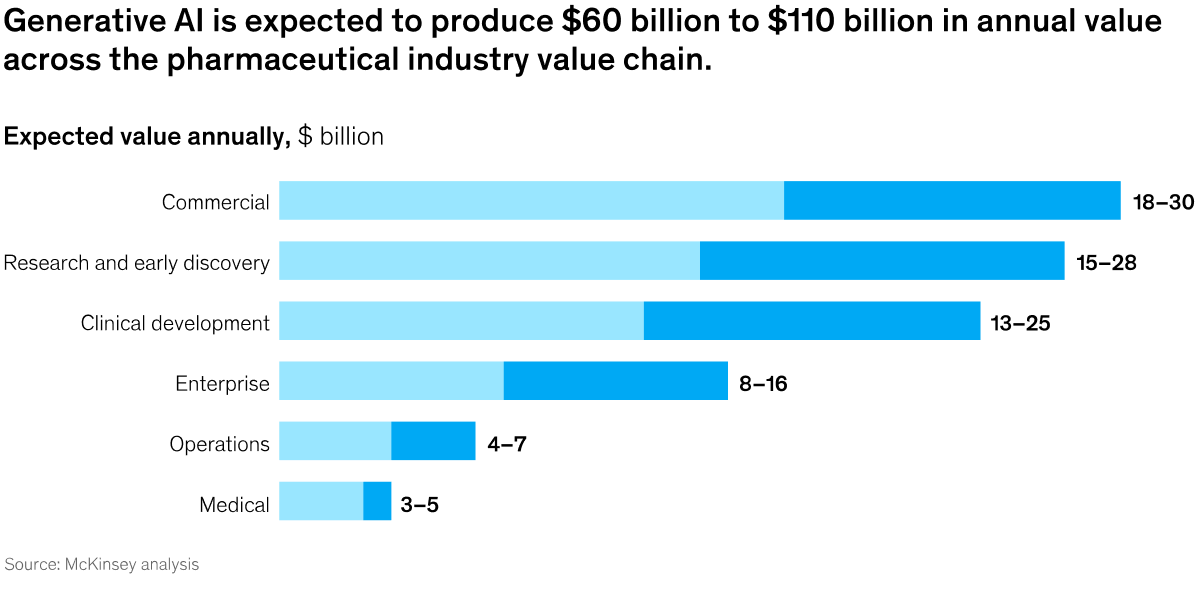
The McKinsey Global Institute (MGI) has estimated that the technology could generate $60 billion to $110 billion a year in economic value for the pharma and medical-product industries (Exhibit 1), largely because it can boost productivity by accelerating the process of identifying compounds for possible new drugs, speeding their development and approval, and improving the way they are marketed. (Source: Generative AI in the pharmaceutical industry: Moving from hype to reality)
Medical Affairs leaders foresee that the efficiencies achievable through Generative AI can enable an unparalleled redeployment of resources towards strategic initiatives, in turn enabling more informed and effective business decisions.
Our latest white paper, developed by the Medical Affairs Digital Strategy Council - a forum of Medical Affairs leaders, explores the enormous potential of Generative AI across various Medical Affairs processes, including data collection, insight generation, content creation, HCP engagement, and performance evaluation.
This blog provides a quick summary of the key takeaways from the whitepaper.
Transformative Use Cases where Generative AI can improve the impact of Medical Affairs
Here are some of the use cases that can achieve fundamental goals of efficiency, effectiveness, and innovation in Medical Affairs:
Solutions like Indegene’s NEXT MLR Review Automation platform are already demonstrating how Agentic AI can streamline the content review and approval process, contributing meaningfully to Medical Affairs’ pursuit of faster, compliant content delivery.
Navigating Challenges in Integrating Generative AI into Medical Affairs
While Generative AI offers immense promise, its integration into Medical Affairs comes with challenges. The council identified the following as potential roadblocks:
Data Privacy and Security:
Ensuring the confidentiality and integrity of research, HCP, and patient data is essential to protect sensitive information
Regulatory Compliance:
AI applications must adhere to multiple laws and ethical standards, including those related to patient rights and data usage
Human Oversight:
Human oversight can help make nuanced decisions that AI might not be capable of
Technical Limitations and Reliability:
Technical limitations can lead to reliability issues, affecting diagnoses or treatment recommendations
Integration with Existing Systems:
Integrating AI into existing healthcare IT ecosystems without disrupting workflows can be complex
Bias and Fairness:
Addressing biases in AI training data is essential to ensure fair outcomes
Ethical Considerations:
Balancing innovation with ethical considerations is crucial
Building Trust:
Transparency in AI decision-making is necessary for patient and professional trust
Maintaining Functional Expertise:
Well-designed training programs for employees, and the right selection of external partners will become crucial
Key Recommendations from the Medical Affairs Digital Strategy Council
To successfully harness Generative AI’s power, the Council recommends focusing on the following areas:
Invest in Training and Development:
Prioritize education on Generative AI tools, data literacy, ethical AI use, and scenario-based learning
Foster Industry-wide Collaboration:
Share insights, best practices and innovative solutions related to GenAI across the healthcare sector
Monitor and Adapt to the Evolving Regulatory Landscape:
Stay informed about the continuously evolving regulations and engage with regulators
Prioritize Human Oversight:
Develop protocols for human review of AI recommendations to mitigate risks, especially in critical areas such as diagnosis and treatment planning
Conclusion
Generative AI has the potential to revolutionize Medical Affairs by enhancing efficiency, effectiveness, and patient care. By addressing challenges related to data privacy, regulatory compliance, and human oversight, healthcare organizations can leverage Generative AI to drive better outcomes for patients and healthcare providers. As we navigate this new era, it’s essential to manage the integration of Generative AI with diligence and foresight, ensuring it serves as a tool for good.
Stay tuned for more insights and updates on how Generative AI is shaping the future of healthcare.
For a deeper dive into the transformative impact of Generative AI on Medical Affairs, download the comprehensive white paper here.
From Promise To Performance.
Trusted by all 20 of the world's top 20 pharmaceutical companies, Indegene helps life sciences organizations accelerate outcomes across the entire value chain.